It's the middle of a busy shift, the bin is running low, and your ice machine just isn't keeping up. For restaurants, bars, and healthcare or institutional kitchens across Eastern Iowa and Western Illinois, a slow ice machine isn't just an inconvenience — it can mean warm drinks, delayed service, and frustrated customers.
Before you assume the whole unit needs replacing, there are several common culprits worth checking first. Here's a walk-through of what usually causes reduced ice output on commercial machines from manufacturers like Manitowoc, Hoshizaki, and Scotsman, and how to tell when it's a quick fix versus a job for a certified technician.
1. Start With Airflow and Clearance
Ice machines need consistent airflow to reject heat effectively. If your unit is tucked into a tight space, sitting near a fryer or oven, or missing the manufacturer's recommended clearance on all sides, it will struggle to produce ice at its rated capacity — especially during warmer months.
Check for:
- At least the manufacturer-specified clearance (commonly 4–6 inches on the sides and back)
- Nearby heat sources like ovens, fryers, or direct sunlight through a window
- Ambient kitchen temperature above 90°F, which can significantly reduce output on air-cooled models
2. Inspect the Condenser Coils
Dirty condenser coils are one of the most common — and most preventable — reasons for reduced ice production. Grease, dust, and kitchen debris build up on the coils over time, insulating them and forcing the compressor to work harder while producing less ice.
What to do: Most manufacturers recommend cleaning condenser coils every 1–3 months in a commercial kitchen environment, more often in greasy or high-traffic locations. A soft brush and coil cleaner (never a pressure washer directly on the coils) will usually restore performance if buildup is the issue.
3. Check Water Filtration and Scale Buildup
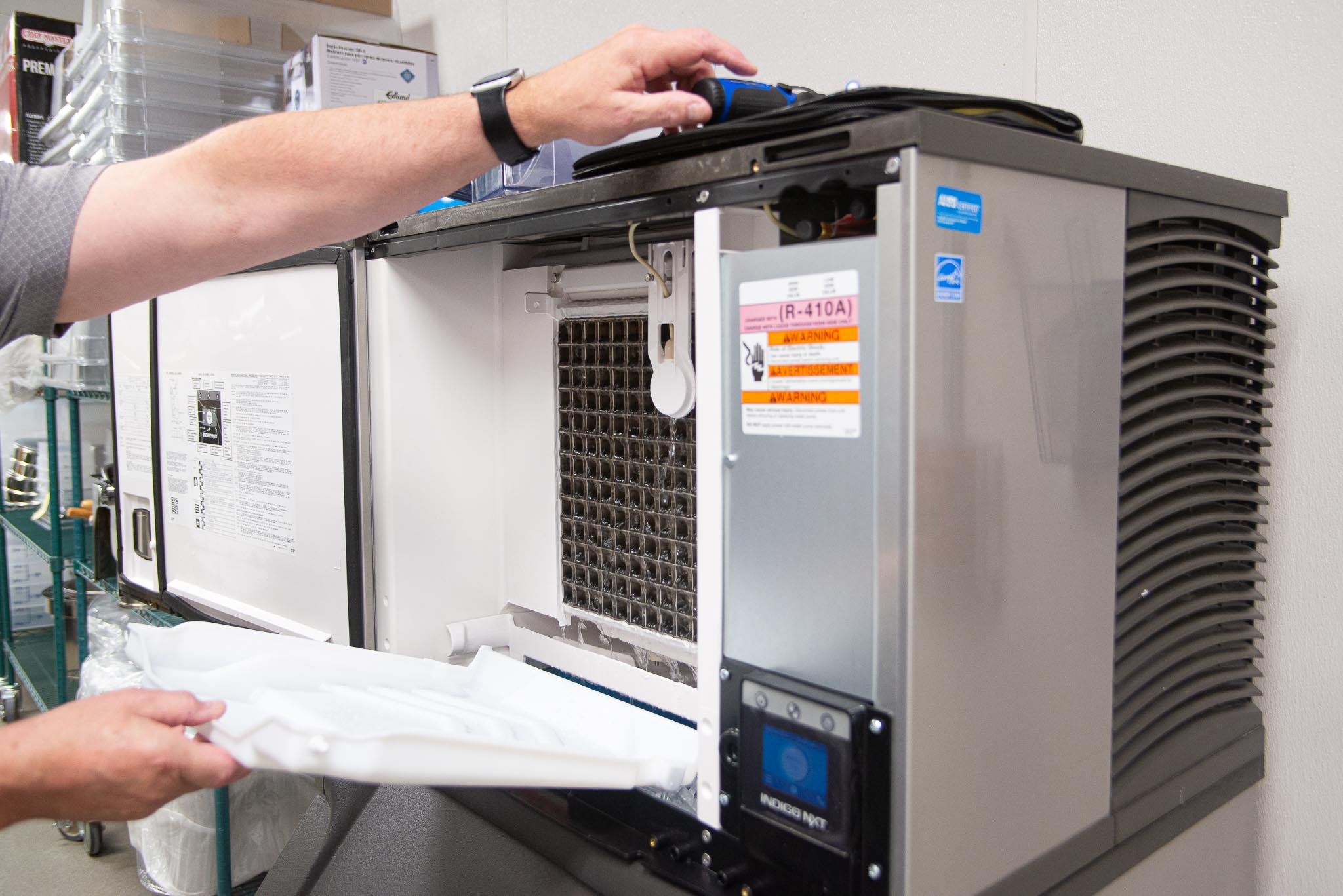
Mineral scale from hard water is a silent performance killer. It coats the evaporator plate, water lines, and float assembly, which slows heat transfer and disrupts the freeze cycle. Over time, this shows up as smaller, cloudier, or misshapen ice cubes — and eventually, a noticeable drop in total output.
Signs of scale buildup:
- Ice cubes that are smaller or hollow
- Longer harvest cycles
- Visible white or gray mineral deposits on internal components
If your machine hasn't had a full descale and sanitation service in the last 6 months, this is one of the first things worth ruling out.
4. Look at the Water Supply
Low water pressure or an undersized water line can starve the machine during the fill cycle, resulting in thinner or incomplete ice formations. This is especially common in older buildings or locations with municipal water pressure fluctuations.
Check for:
- A partially closed shutoff valve
- A kinked or undersized water line
- A clogged inlet water filter, which is often overlooked but restricts flow the same way a dirty condenser restricts airflow
5. Verify the Water Curtain, Float, and Bin Thermostat
On flake and cube machines, a misaligned water curtain or a stuck float switch can prevent the evaporator from filling properly, leading to inconsistent or reduced ice formation. Separately, a bin thermostat or bin control that's out of calibration may tell the machine to shut off before the bin is actually full — which looks like "not enough ice" even though the machine itself is working fine.
These components are adjustable, but getting the calibration right typically requires manufacturer-specific know-how, which is where a certified technician earns their keep.
6. Consider Refrigerant and Compressor Health
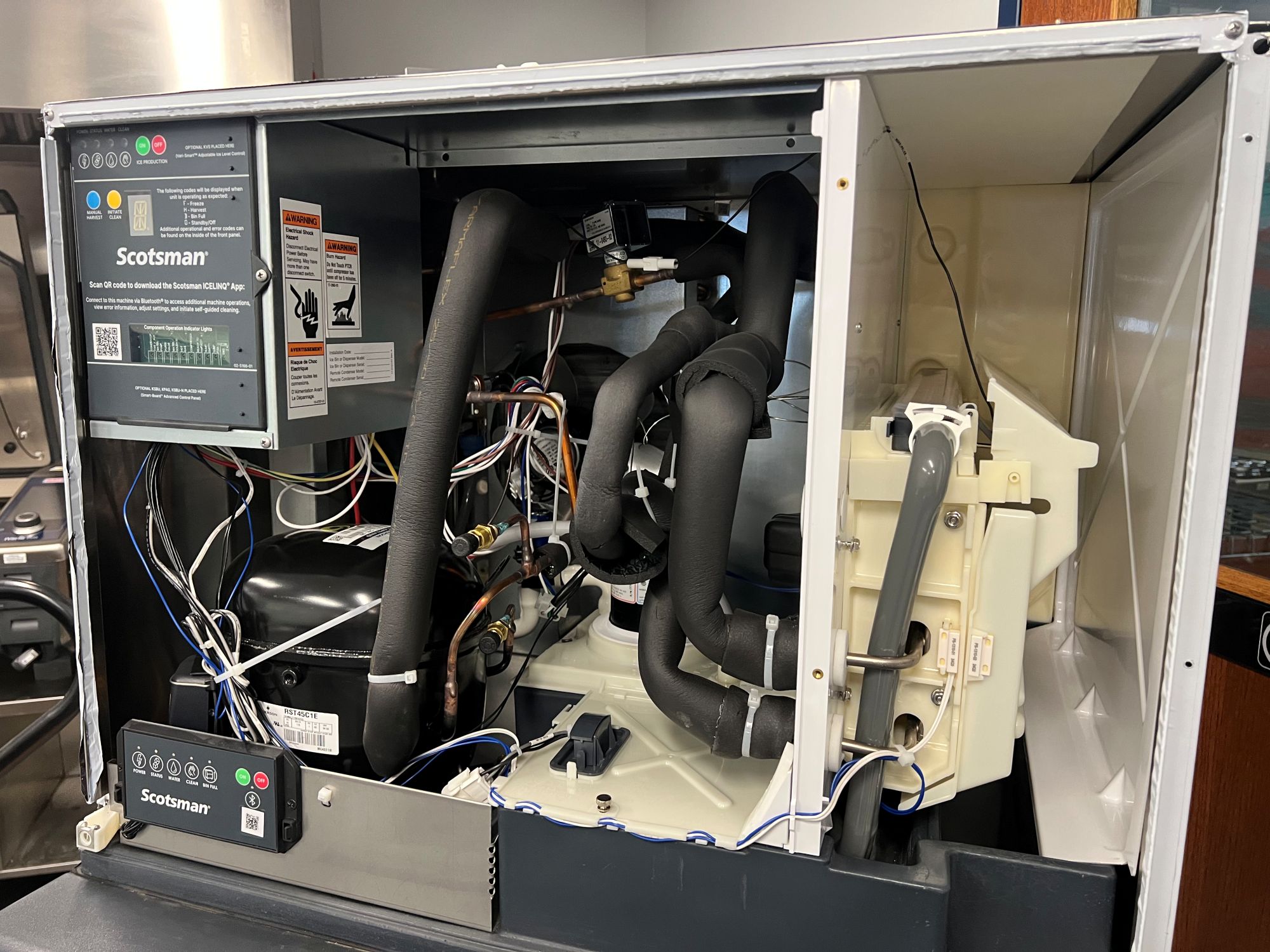
If airflow, water supply, and internal components all check out but output is still low, the issue may be refrigerant-related — a slow leak, an undercharged system, or a compressor that's nearing the end of its service life. These aren't DIY fixes. Refrigerant work requires EPA certification and manufacturer-specific diagnostic procedures, and misdiagnosing a compressor issue can turn a repairable problem into a full replacement.
DIY vs. Call a Technician
| Likely a DIY fix | Call a certified technician |
|---|---|
| Dirty condenser coils | Refrigerant leaks or low charge |
| Improper clearance/airflow | Compressor issues |
| Clogged inlet water filter | Water curtain, float, or thermostat calibration |
| Basic exterior cleaning | Sealed system repairs |
As a rule of thumb: if the fix involves opening the refrigeration system or recalibrating internal controls, it's worth bringing in a technician who's factory-trained on your specific brand. Improper repairs on Manitowoc, Hoshizaki, or Scotsman units can also void manufacturer warranties.
Don't Let a Down Machine Slow Down Service
Ice machine problems have a way of showing up at the worst possible time. STAR Foodservice Equipment Repair is a CFESA-certified, authorized service provider for Manitowoc, Hoshizaki, and Scotsman across Eastern Iowa and Western Illinois — so whether it's a coil cleaning, a water system diagnostic, or a full sealed-system repair, our technicians know these machines inside and out.
And if your unit is down longer than expected, our ice machine rental program can keep your operation running without interruption while repairs are completed.
Ready to get your ice production back on track? Schedule a service call or ask us about ice machine rental options for your location.